



Ventilation air grille diffuser
air vent manufacturer since 2002


 Vairtech
  2025-12-23



Whether it’s in your home, a residential building or a commercial office space, ductwork is designed to contain air as it is conveyed through a HVAC system
However, the world of ducting is varied and diverse with rectangular ducting and round ducting being the two main contenders.
If you’re about to install an HVAC system and you aren’t sure of which ducting you should use, the article below offers more insights into the advantages and disadvantages of both. It also focuses on cost, energy efficiency, least resistance to air flow, and the primary differences between the two. Ready to discover more? Let’s begin.
When we talk about rectangular ductwork or square ducts, it’s important to note that this type of ducting can also be referred to as a flat duct. They are most commonly used in spaces that are quite limiting and which do not allow for the height of round ducts. Some of the advantages of square ducting are:
Using a square duct is not always the ideal solution though. In some cases, it can be problematic. This means that it comes with certain disadvantages, which may include the following:
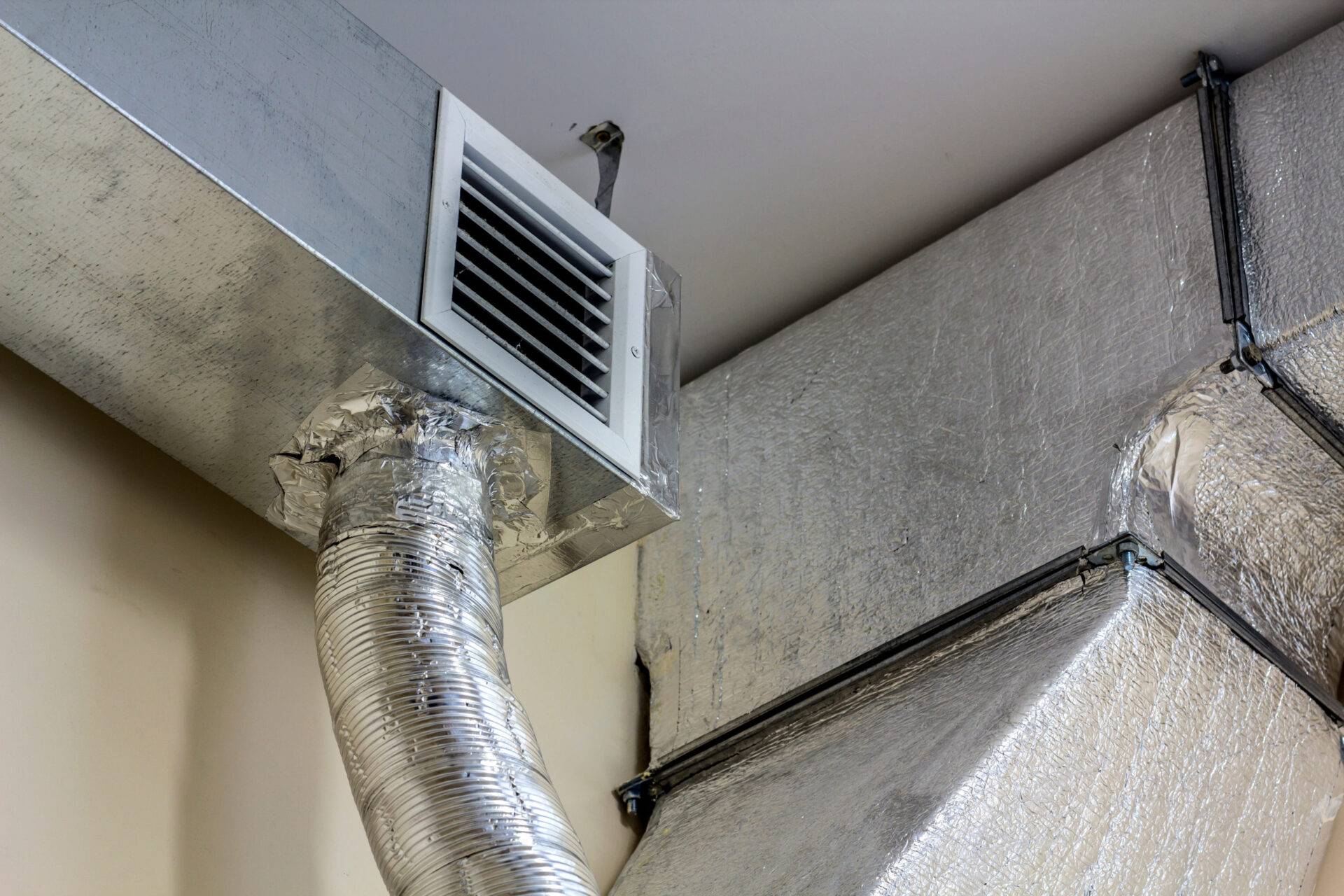
Round ducting, also known as circular or spiral air ducts, are the more frequently encountered type of ductwork. These ducts come with a number of advantages, such as:
Despite all their advantages, round ducts are not suitable for all places and locations. Here are a few reasons why:
When it comes to choosing between a round or square duct, cost considerations will naturally enter the equation. In practice, the cost of round ducting systems is usually much lower and cost effective than rectangular systems by approximately 67%.
The most energy-efficient shape of duct is usually round ductwork. However, you should consider other factors when determining energy efficiency such as static pressure, velocity of the air flow and movement within the duct and others.
Square plastic ducting that experiences high velocities is much more likely to create pressure loss and noise problems, as opposed to round or flat-oval ductwork. However, because round ducting does not fully take up the available space like square ducting would, it is technically considered less efficient at maximising airflow.
The most common type of duct is the round or flat oval type of ducting, which usually comes in longer lengths and which can be easily fitted into a number of different environments.
Conclusion
Choosing between square and round ductwork is an important consideration that you’ll need to make. Factors to consider when making your decision include how much space you have, whether you have exposed ducts, if your HVAC system is high or low velocity, performance, fabrication, installation, economics and acoustics.
If you need expert advice on this aspect, you can always count on the experts at Vairtech to help you and lend you their professional opinion given your specific circumstances. Get in touch with us today!

24-hour service hotline

Add: Room1804, 8thFloor, 1st Building, Guang Fo Future Town, 85 Lingnan Road, Dali Town, Nanhai District, Foshan City, Guangdong Province, China